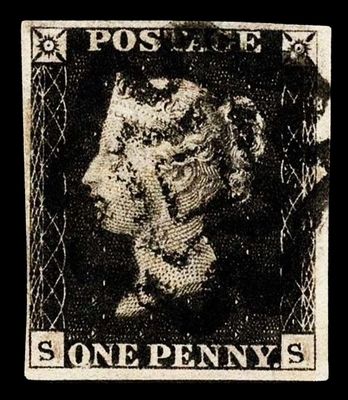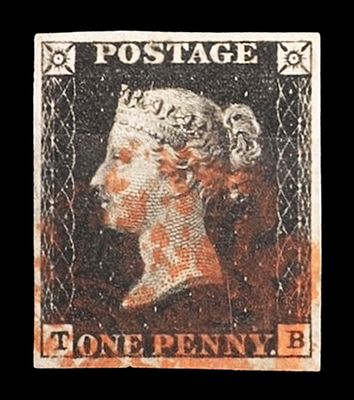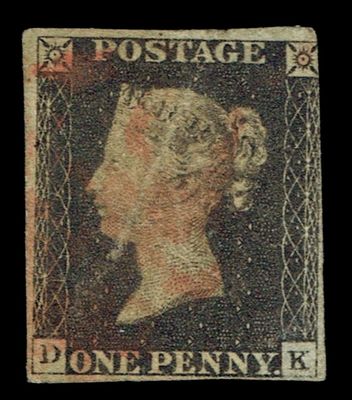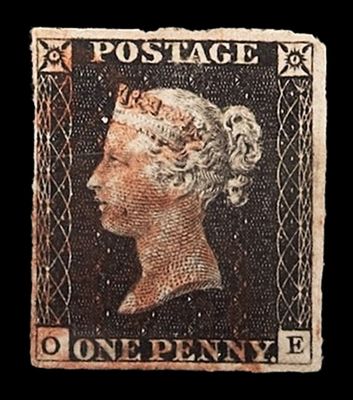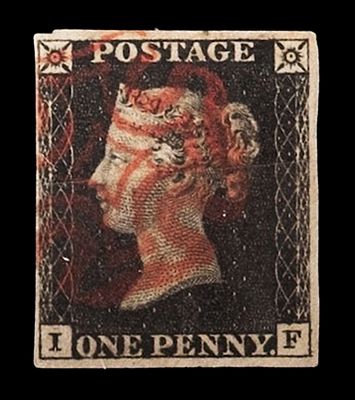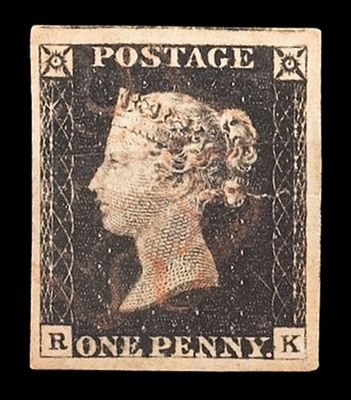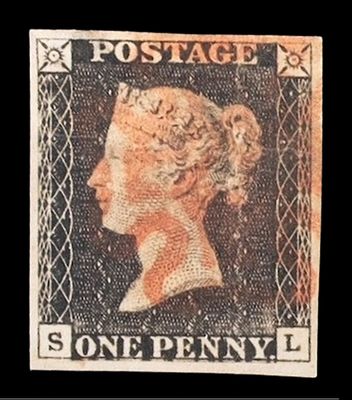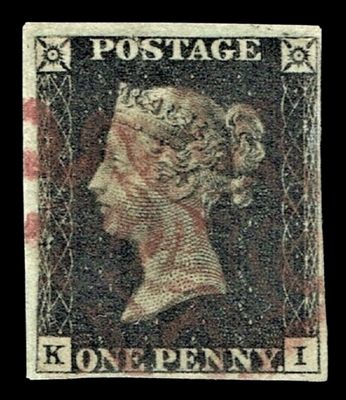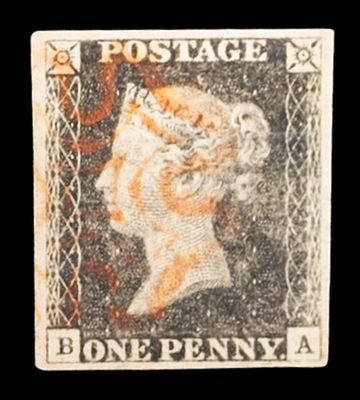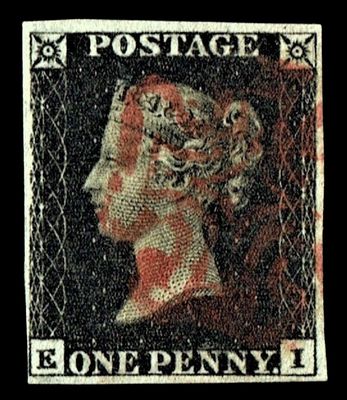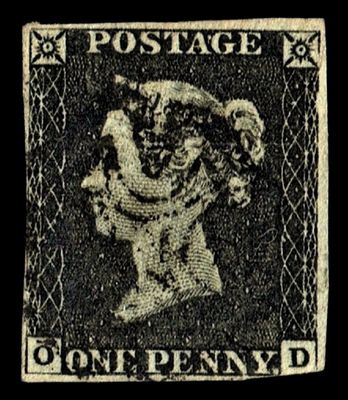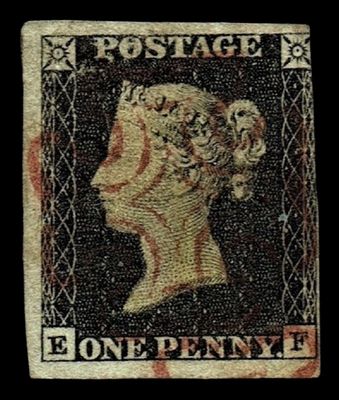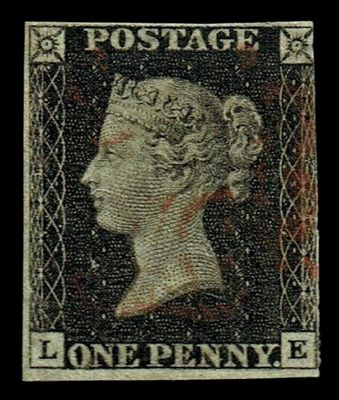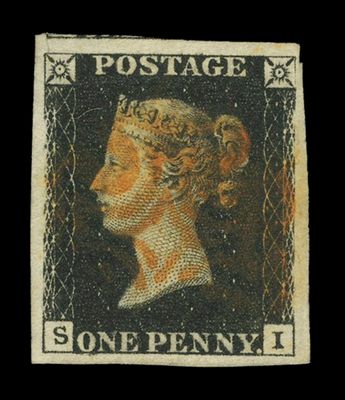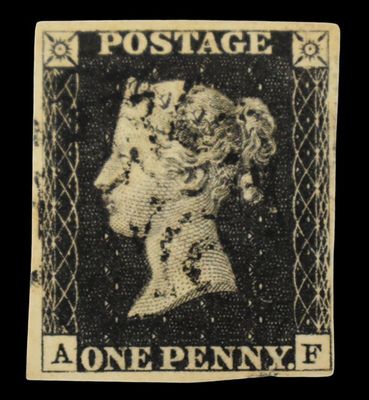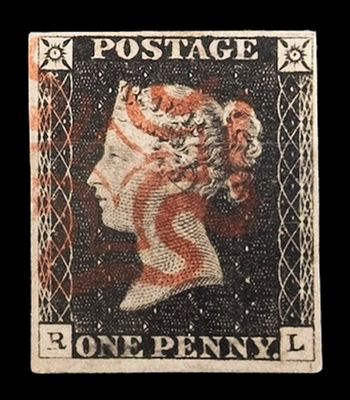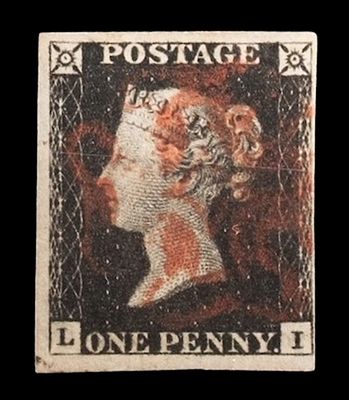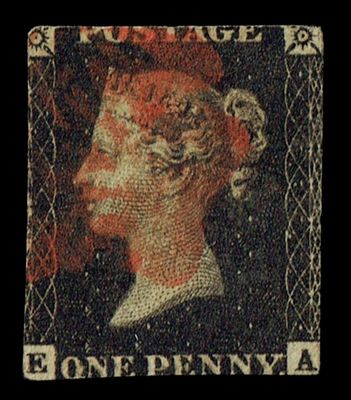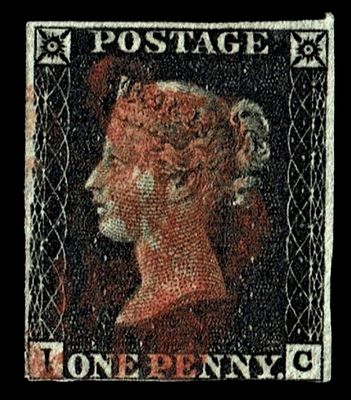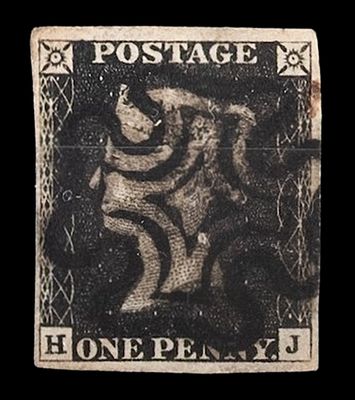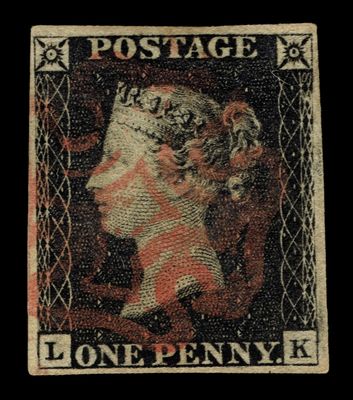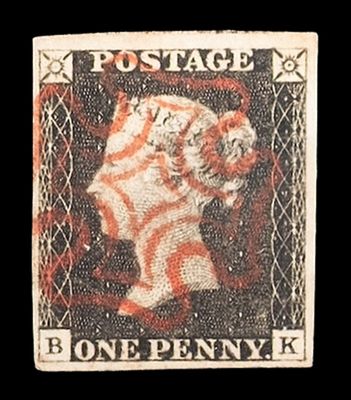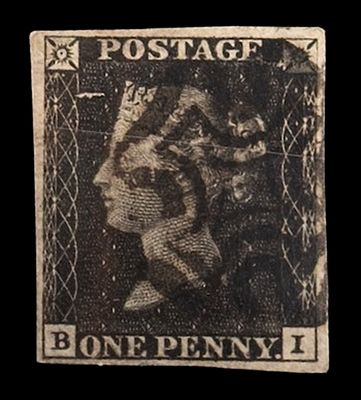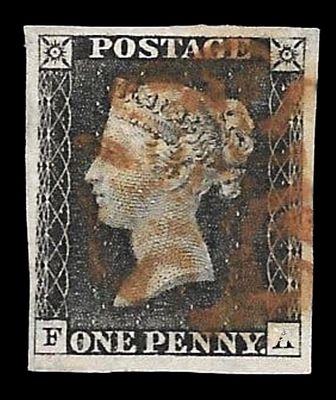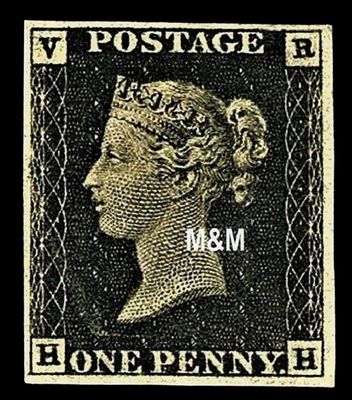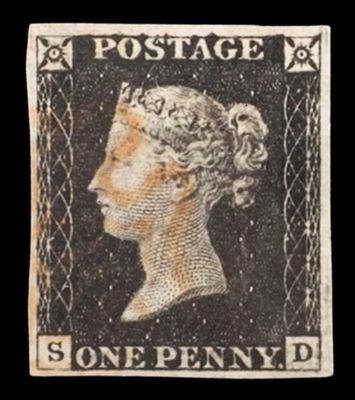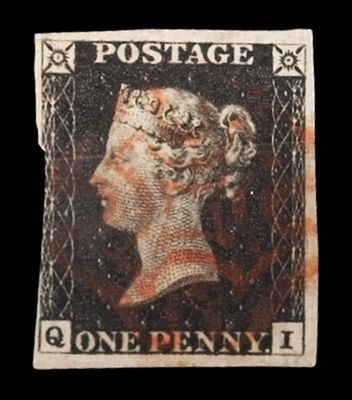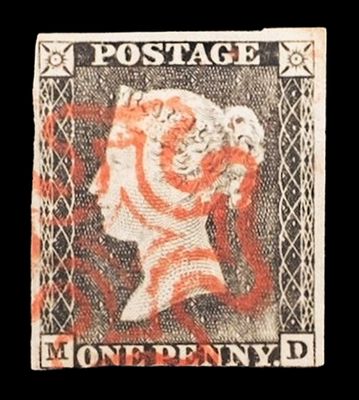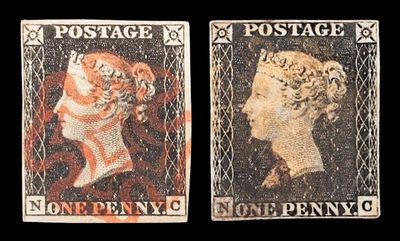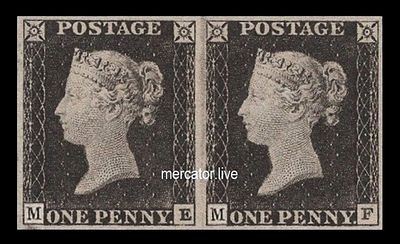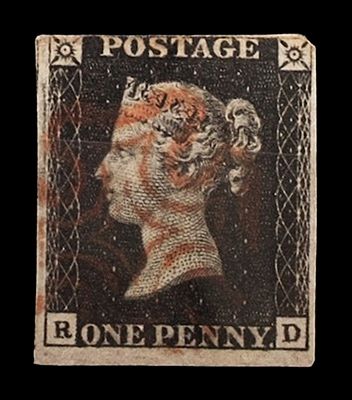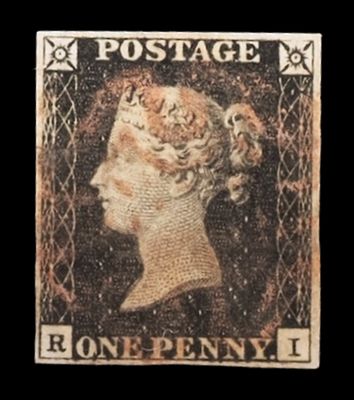
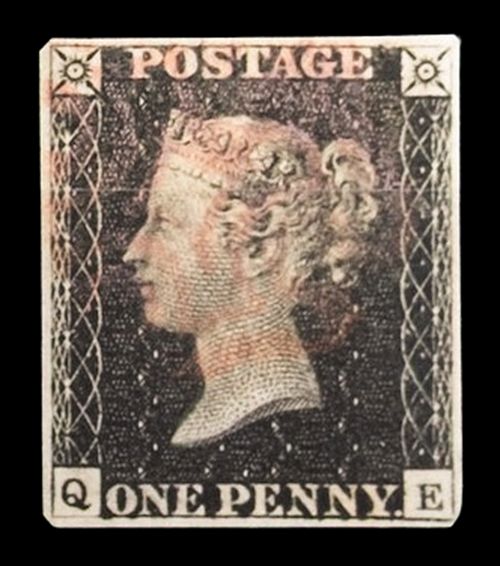
GB QUEEN VICTORIA, BLACK PENNY, PLATE 1b Q-E, RE-ENTRY, NO RECORD, BASE SHIFT, “O” FLAW, 4 MARGINS
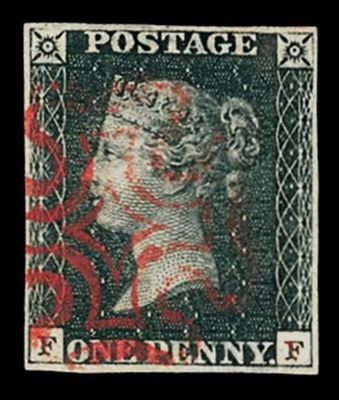
ABOUT THE STAMP
The characteristics of this stamp describe a highly specific and desirable example of the 1840 Queen Victoria Penny Black from Plate 1b, lettered Q-E (indicating its position on the plate).
Key Characteristics of Plate 1b Q-E:
Plate 1b (State 2): This plate is the repaired version of Plate 1a, which wore down rapidly due to being unhardened. Plate 1b is the only plate where every one of the 240 units was repaired by re-entry to restore the design.
Q-E Re-entry & Base Shift: Because the entire plate was re-entered, "Q-E" exhibits characteristic doubling or shifting. A base shift (or basal shift) is a common variety on Plate 1b where the bottom portion of the design appears slightly doubled or moved from its original position.
The "O" Flaw: This is a crucial diagnostic for certain Penny Black plates. It is a white flaw or "blob" that appears on the right side of the "O" in "ONE".
Note: While the "O" flaw is most famously associated with later plates like VII, VIII, IX, and X, its appearance on Plate 1b stamps usually suggests a different specific repair or localized plate mark, as the primary "O" flaw did not develop until later plates.
Not Recorded (No Record): This phrasing often appears in auction descriptions or specialized plating guides (like Nissen) when a specific sub-variety—such as a specific combination of ray flaws or a particular re-entry state—is not explicitly listed in standard references.
4 Margins: For collectors, "4 margins" means the stamp has been cut clear of the design on all four sides, significantly increasing its value compared to examples with "cut into" or "touching" edges.