IMPORTANT:ANY OMISSIONS or ERRORS WITH THE LISTING? CONTACT CUSTOMER SERVICE
SPECIAL THANK YOU:FOR SUPPORTING CANCER RESEARCH AND CLINICAL TRIALS.
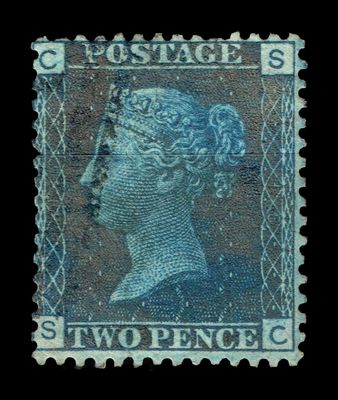
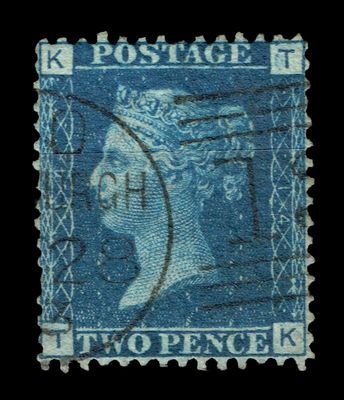
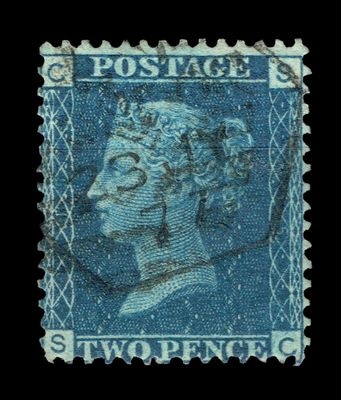
ABOUT THE STAMPS
Why does the back say 45?
SG 45 vs. Plate 15 Explained
SG 45 does include Plate 15.
In the main Stanley Gibbons (SG)
Concise and Standard catalogues, SG 45
acts as the parent catalogue number covering the 1858–1876 Queen Victoria 2d Blue series with corner letters and plate numbers engraved in the side design. This overarching listing spans across Plates 7, 8, 9, 12, 13, 14, and 15.
Since the Concise catalogue draws a hard line between SG 45 and SG 46 based on the plates, the marking on the back is factually incorrect for the SG system.
The small "45" written upside down right in line with the "Plate 15" text is almost certainly a reference to a completely different European catalogue system.
For instance, in the classic Michel Catalogue(the standard across Germany and Europe), the 1858 2d Blue series across all plates is grouped under the primary main number Michel 11
or Michel 15
depending on the edition, but other local European dealer pocket guides frequently used generalized numerical sequences where the total 4-corner group fell on line 45.
The confusion likely comes from specialized listings (such as the SG Specialized Volume 1 or certain dealer codes), where the varieties are broken out further by shade or design tweaks:
SG 45:
Typically denotes the Deep Blue
or Blue
shade with thicker white lines under the country name.
SG 46 / SG 47:
Often references the specific Thin Lines
variety or distinctive Deep full blue
shades within those same plates (particularly Plates 12–15).
The pencil markings " 45" and " 15" on the reverse are expert or dealer annotations confirming it as SG 45, Plate 15.
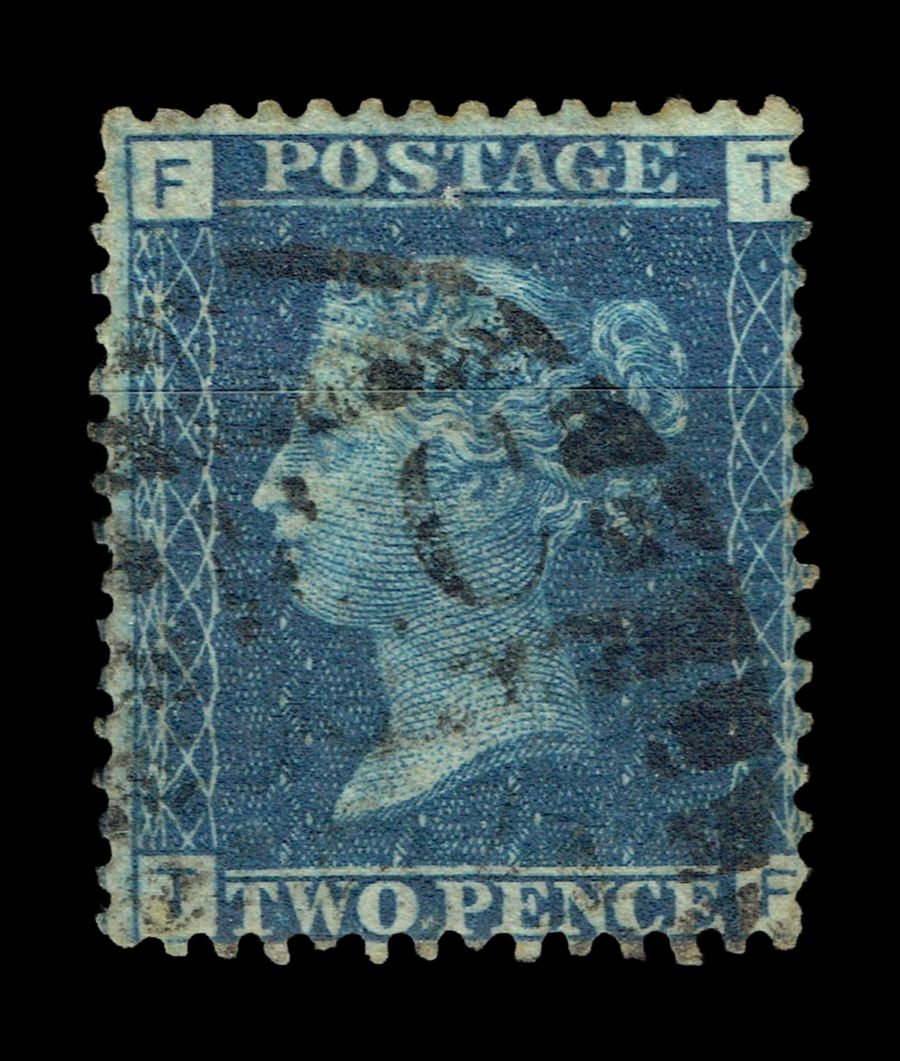
Corner Letters Layout (TF - FT)
For Line-Engraved issues featuring 4-corner letters, the top corners mirror the bottom corners but in reverse. Your stamp shows F(Top Left), T(Top Right), T(Bottom Left), and F(Bottom Right).
Row (Top Letter):F
is the 6th letter of the alphabet, which means this stamp comes from Row 6
of the printing sheet.
Column (Bottom Letter):T
is the 19th letter of the alphabet, meaning it comes from Column 19.
The Watermark:
The crown you are seeing on the back is the Large Crown Type II
watermark. It is smaller and more compact than the later "Imperial Crown" seen on surface-printed issues, but it replaced the earlier "Small Crown" used on imperforate or early perforated line-engraved issues.
CDS London 11:
The Circular Date Stamp with code 11
represents an Inland Office or specific District branch marking within central London, rather than a local suburban post office like Battersea. (Battersea typically used the 11
barred numeral cancellation within a diamond or circle when it was an outer district, but in a standard circular date stamp format, 11 indicates a central London section index or duty code).
IMPORTANT INFORMATIONPlease be aware check whether on the stamp is any overprint. With every overprint you must be aware that forgeries are around therefore, to be 100% sure if stamp does not have attest completed, do that for your peace of mind. Stamp sold as seen.LEGAL DISCLAIMER
Stamp as seen on images. Please be aware that post is for FREE dealt via Royal Mail however, if you want to have secure delivery can be arranged to be posted by DHL or UPS, ...
All money from the sale go to Cancer Foundation and Hospital Trials therefore, there is no returning policy available as well no refund (no return and no refund for this stamp).
PAYMENT & POSTAGE DETAILS
For the UK: Royal Mail Special Delivery (FREE of charge)
Europe and worldwide: Royal Mail International Signed and Trace (FREE of charge)