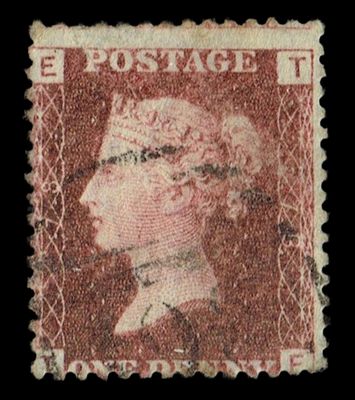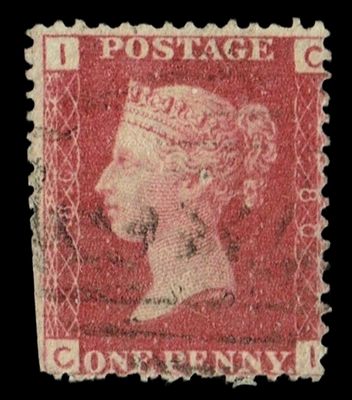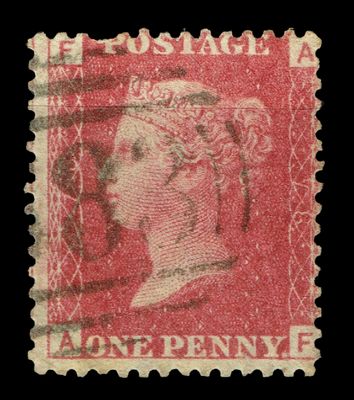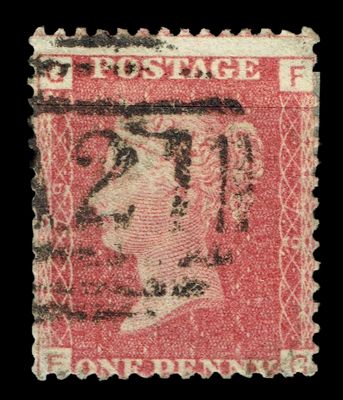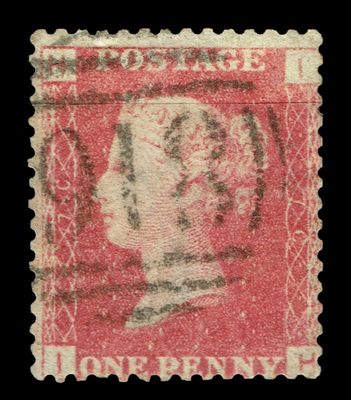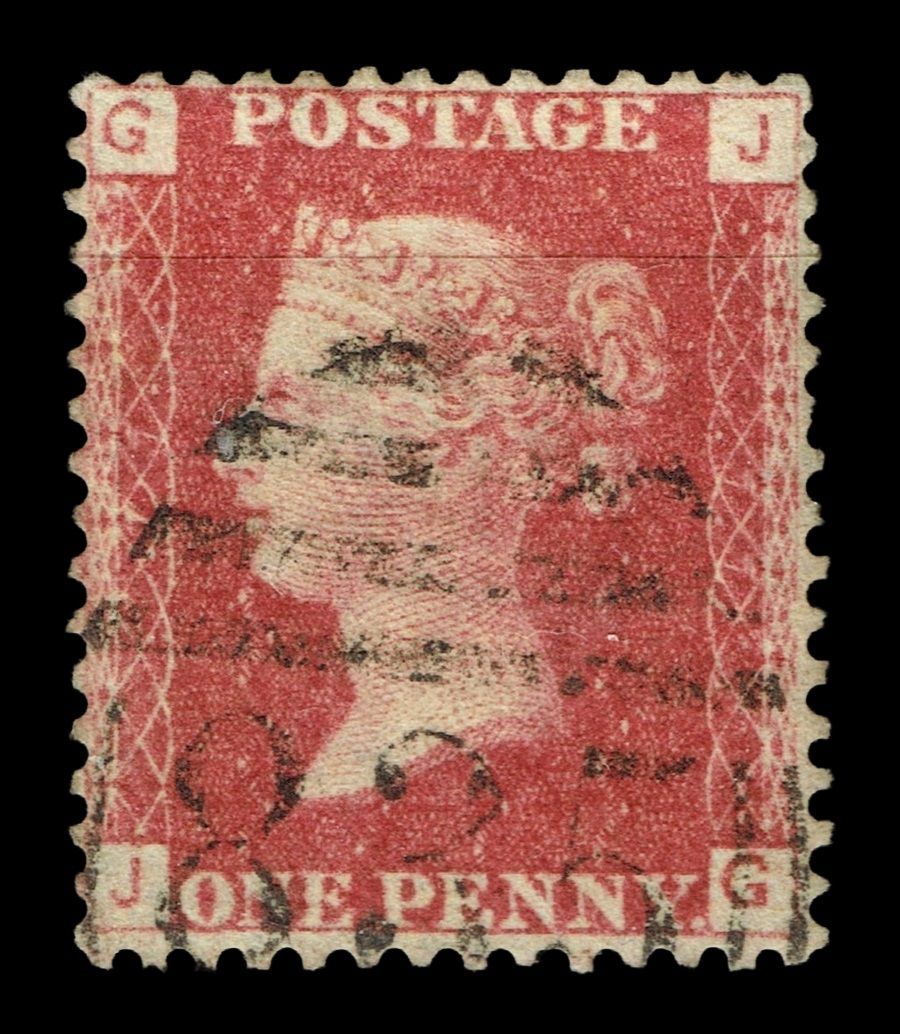
GB QUEEN VICTORIA 1855/64, 1d RED BROWN SG 43/44, Pl.77, GJ-JG, Used
ABOUT THE STAMPS
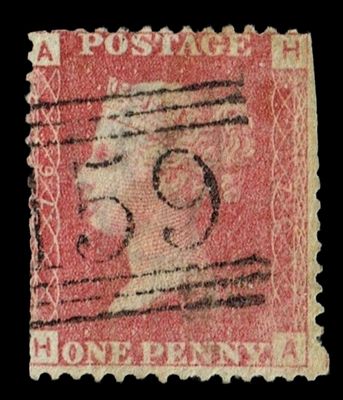
For more than 50 years, I have tried to obtain reliable documentation about Plate 77, but the search has felt like a “mission impossible.” Why?
This stamp bears the letters J-G, placing it in Row J, Column G. Philatelists have meticulously documented the location of every known surviving Plate 77 stamp. Only about 9 to 12 examples are known worldwide, and none bears the letters J-G.
In 1864, production plate 77 was made but immediately rejected by the Post Office because poor alignment caused the perforations to cut into the design.
The plate was ordered to be destroyed, and the trial sheets were intended for incineration. However, at least one sheet entered public circulation by mistake; the information I have obtained suggests that three sheets may have circulated.
To be clear, there are no official institutional records identifying which corner check-letter combinations entered public circulation. Because the Post Office ordered the plate and its trial sheets destroyed, it never published or recorded a breakdown of the sheets that escaped destruction.
Today’s map of known check-letters does not come from an official register. Instead, philatelists reconstructed it over 150 years through observed examples and expert consensus.
Because Plate 77 is regarded as the “Holy Grail” and millions of collectors inspect every Penny Red they encounter, any previously unrecorded letter combination is subjected to intense forensic scrutiny.
Each Penny Red plate used a fixed 240-stamp grid, running from AA to TL(Rows A–T and Columns A–L). Each letter combination therefore appeared exactly once on every sheet.
If Plate 77 stamps reached the public through one partially salvaged trial sheet—or a very small number of sheets—then, statistically, any letter combination could still exist.
I suspect this may be a genuine, previously undiscovered Plate 77 survivor bearing the J-G letters, so it requires forensic examination. A routine visual inspection is insufficient because skilled forgers can deceive the naked eye. Reliable verification requires:
- Microstructural paper scan : A professional laboratory scan, such as backscattered electron imaging, should examine the paper fibres beneath the plate numbers. If a “1” was bleached or scraped away, the fibres will show permanent disruption or thinning.
- Chemical ink mapping (EDXRF): X-ray micro fluorescence can map the ink’s chemical signature. Elements such as mercury, lead, and sulphur should align cleanly with the digits. If a digit was manually erased, the scan should reveal chemical traces or a break in the mineral pattern.
- Stamp certificated by Dr. Emilio Diena back in 1912.
IMPORTANT INFORMATION
LEGAL DISCLAIMER
Stamp as seen on images. Please be aware that post is for FREE dealt via Royal Mail however, if you want to have secure delivery can be arranged to be posted by DHL or UPS, ...
All money from the sale go to Cancer Foundation and Hospital Trials therefore, there is no returning policy available as well no refund (no return and no refund for this stamp).
PAYMENT & POSTAGE DETAILS
For the UK: Royal Mail Special Delivery (FREE of charge)
Europe and worldwide: Royal Mail International Signed and Trace (FREE of charge)